


 Contact us


Custom Tension Spring Solutions
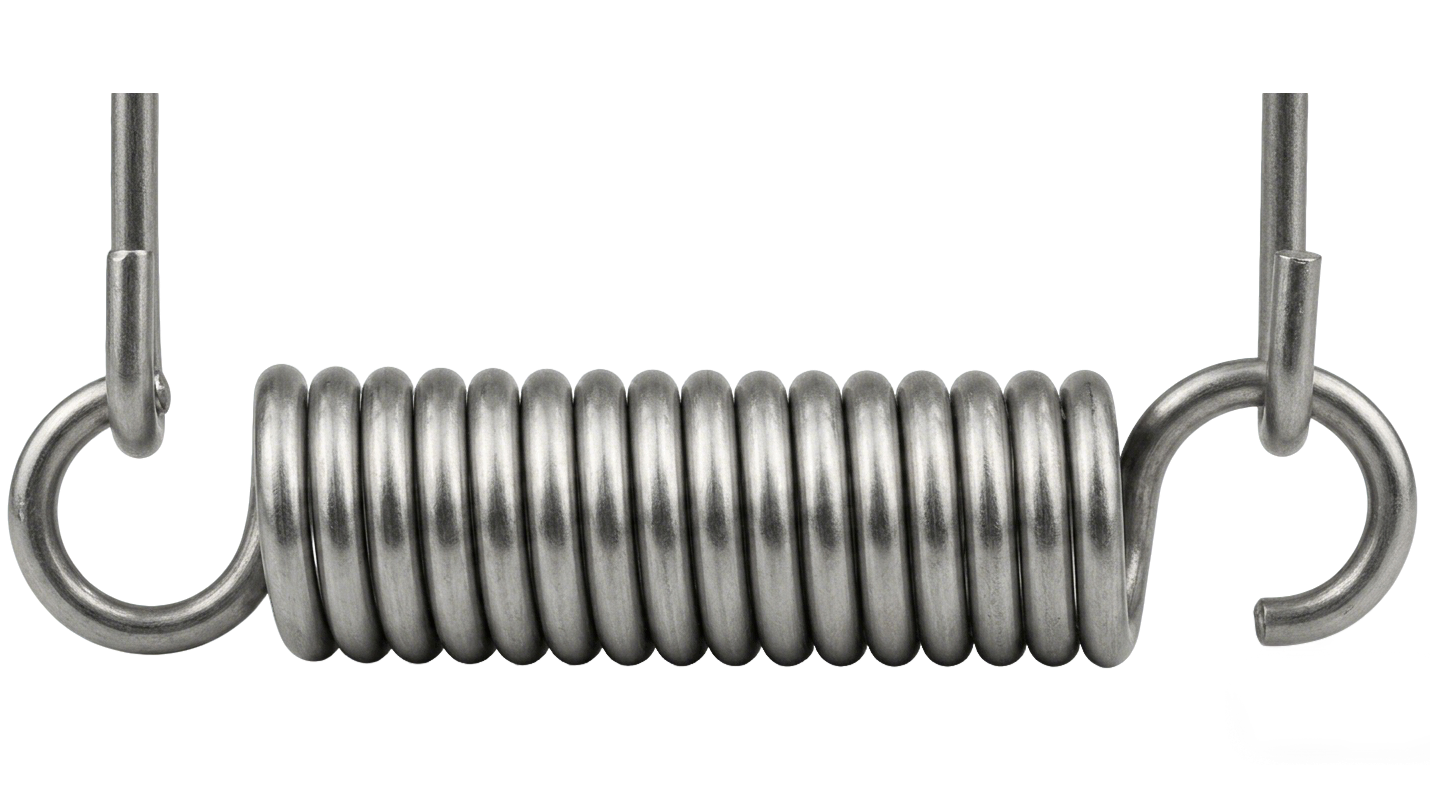
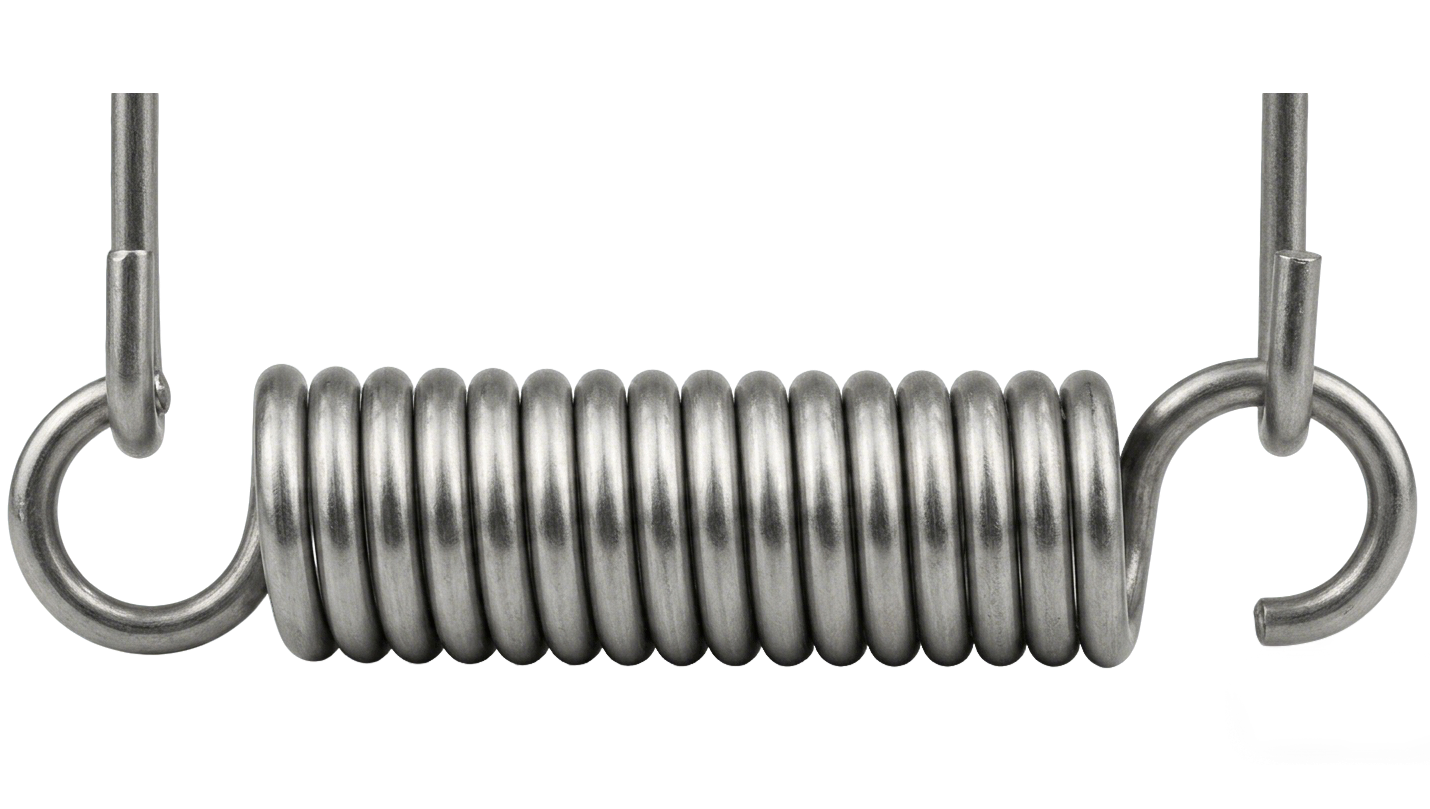
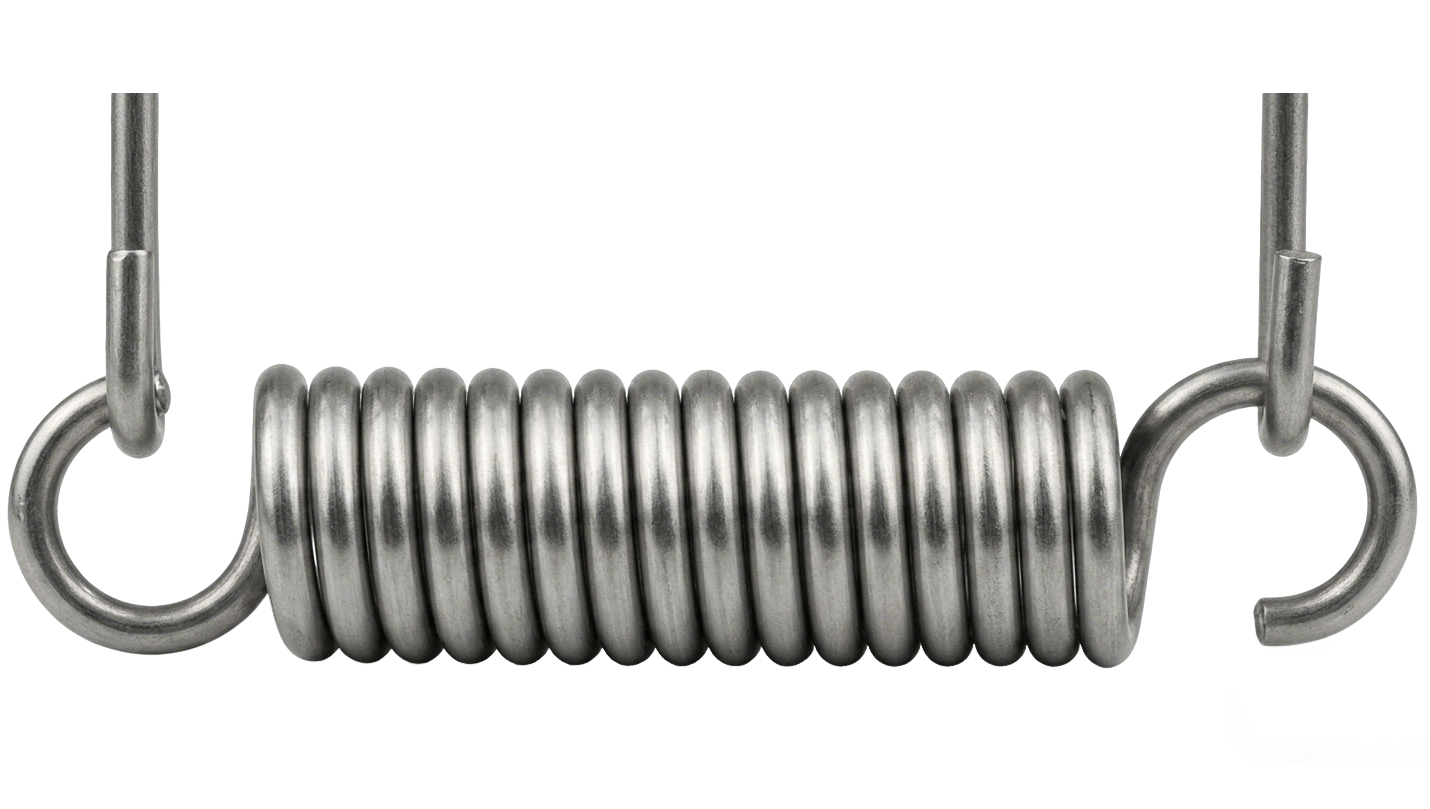
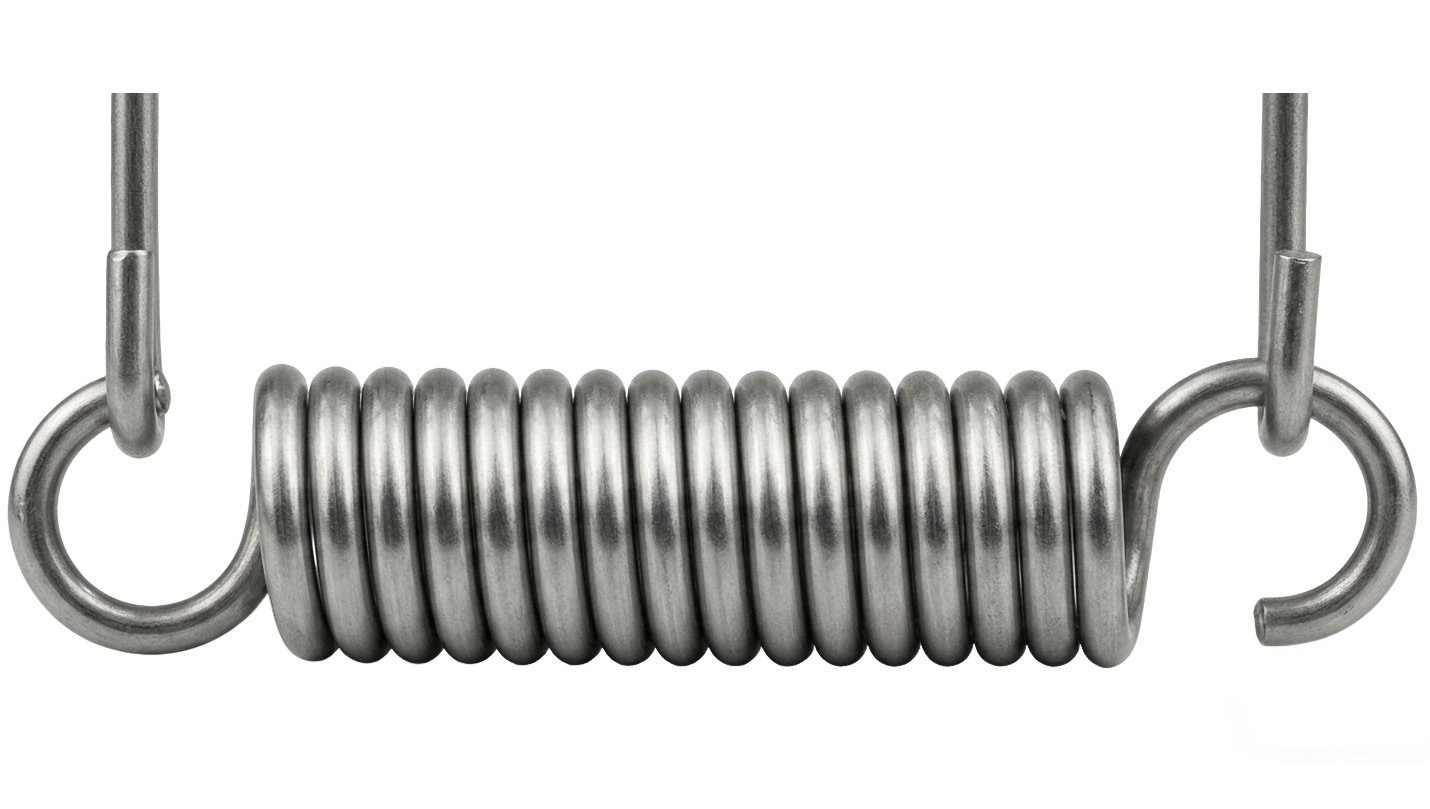
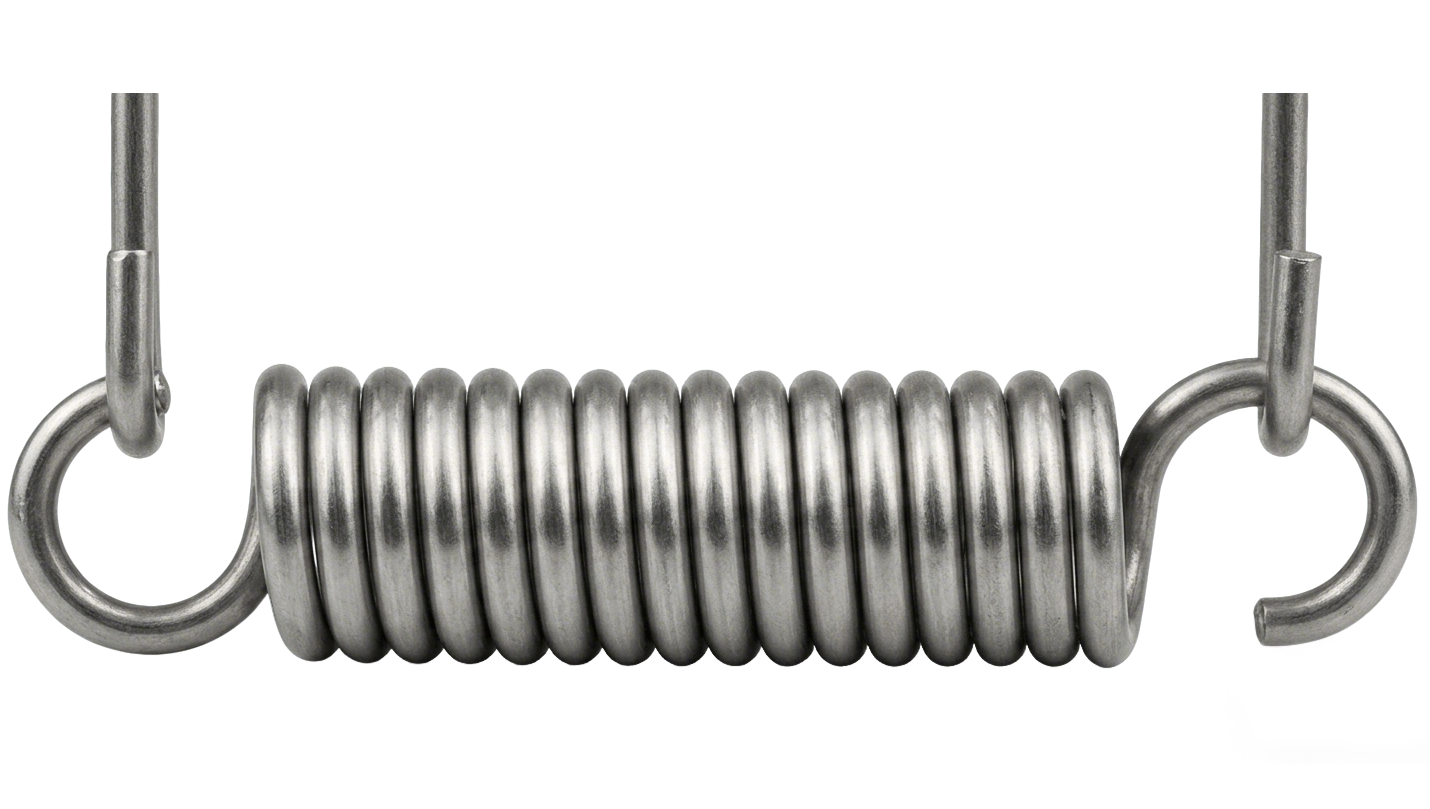
A tension spring is an elastic component designed to withstand axial tensile forces. Its primary function is to store energy when stretched, thereby providing tensile force to equipment or causing it to return to its original position.
-
Automatic reset

 It automatically retracts after being stretched, allowing the component to quickly return to its original position.
-
Shock Absorption and Vibration Damping
It absorbs sudden tension or impact energy, protecting equipment and enhancing stability.
-
Provides constant tension
Apply a steady, constant tension to prevent components such as conveyor belts and ropes from becoming slack.
-
Ideal for small spaces
Thanks to its tower-shaped (conical) design, the components can be partially nested after being extended, significantly saving installation space.
-
Long-term, stable, and reliable
Made of spring steel, it is fatigue-resistant and corrosion-resistant, and can be stretched tens of thousands of times.
Industry Applications
Consumer Electronics
Thanks to their fine wire gauge, responsive spring action, compact size, and high fatigue resistance, tension springs are widely used in smartphone camera autofocus modules, laptop keyboards, headphone headbands, game controller triggers, and flip mechanisms in electronic dictionaries. They primarily perform functions such as button reset, lens extension and retraction, opening/closing damping, and contact return. As key foundational components, they play a crucial role in enhancing operational feel and reliability within the trend toward slim, integrated designs in consumer electronics.
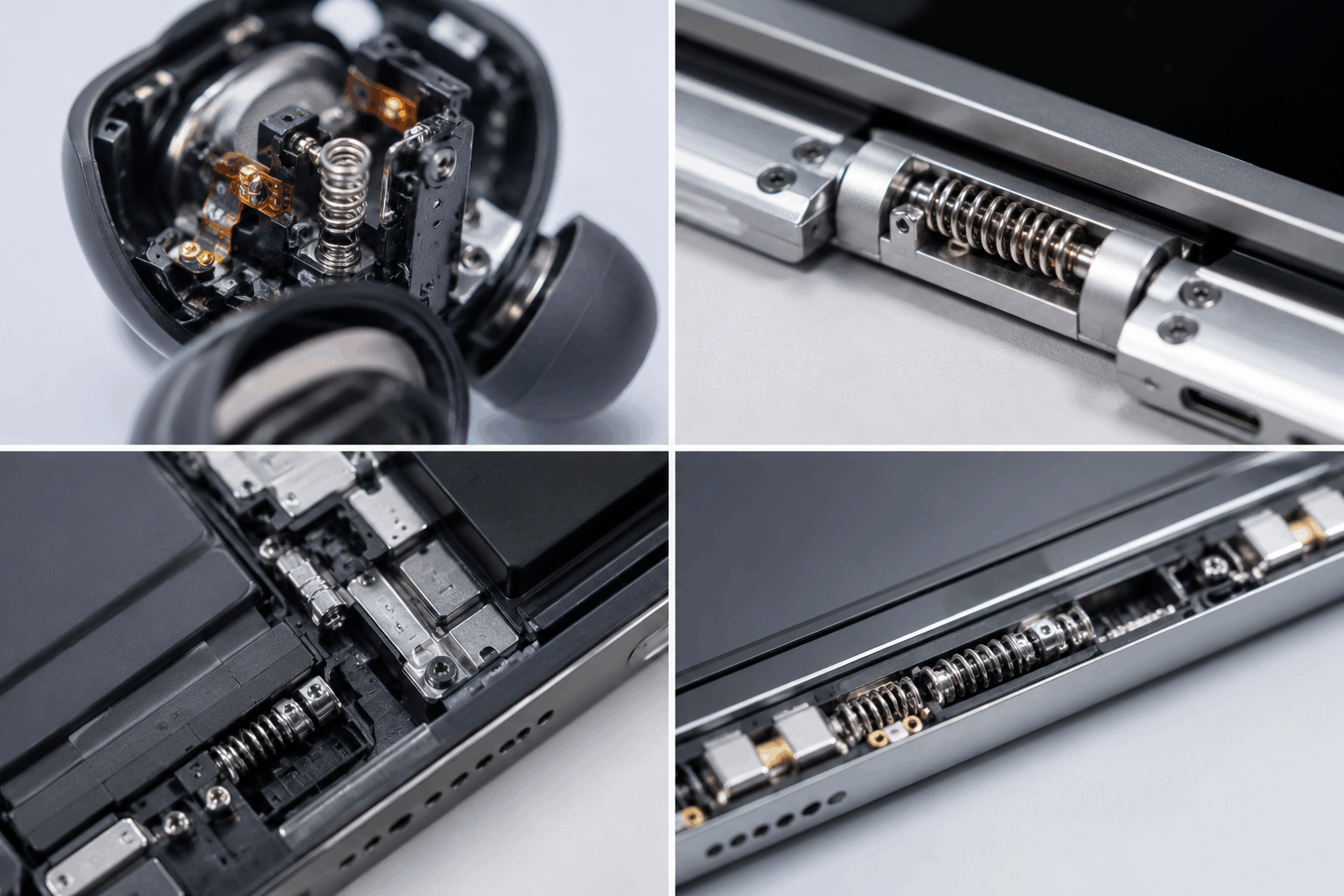
Cell phones, headphones, and smart wearable devices
Home Appliances
Tension springs are widely used in washing machine counterweights, refrigerator door hinges, coffee machine handle return mechanisms, and door opening and closing mechanisms in various home appliances. They primarily perform functions such as force balancing, automatic closing, shock absorption, and safety interlocking, making them critical mechanical components that ensure the long-term stable operation of home appliances and enhance user experience and safety.
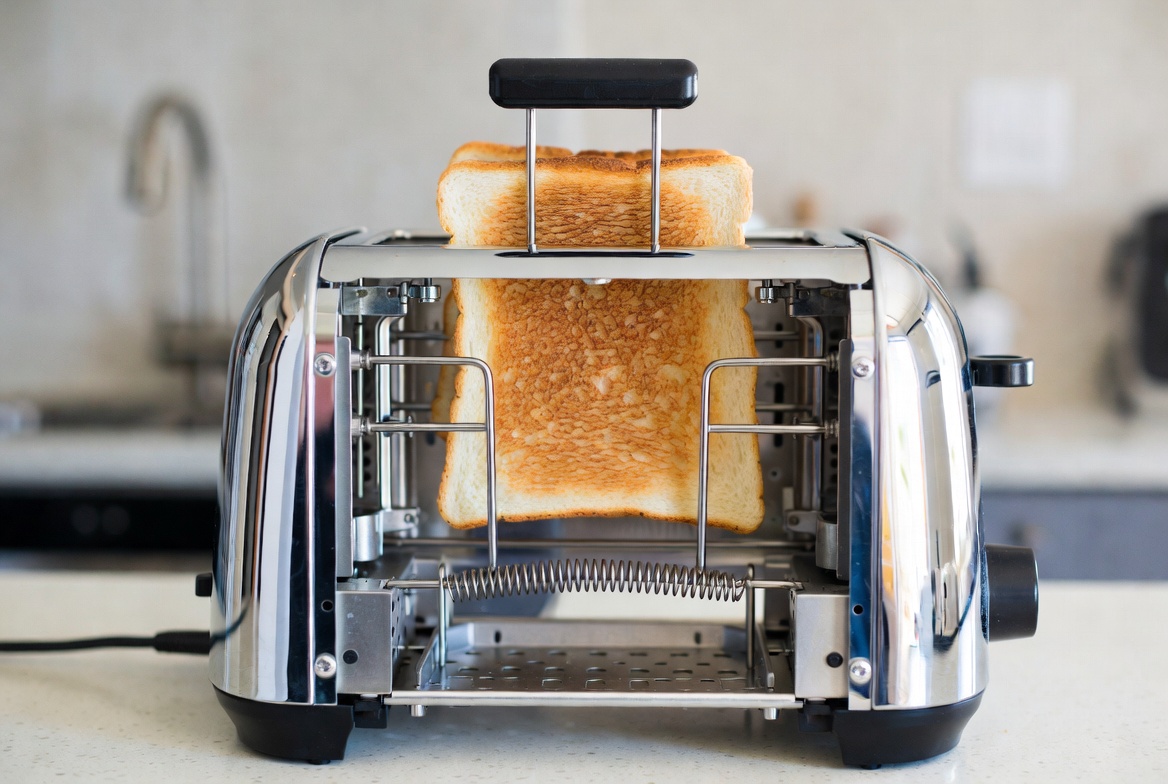
Washing machines, refrigerators, floor scrubbers, air conditioners, televisions, bread makers, microwaves
Power Tools
Tension springs are widely used in electric drill switches, jigsaw guards, nail gun firing mechanisms, and quick-release chucks for various tools due to their high load capacity, impact resistance, fatigue resistance, and ability to provide strong restoring force in confined spaces. They primarily perform functions such as power activation, safety reset, quick locking, and shock absorption, making them essential transmission and protective components that ensure the responsiveness, safety, reliability, and durability of power tools.
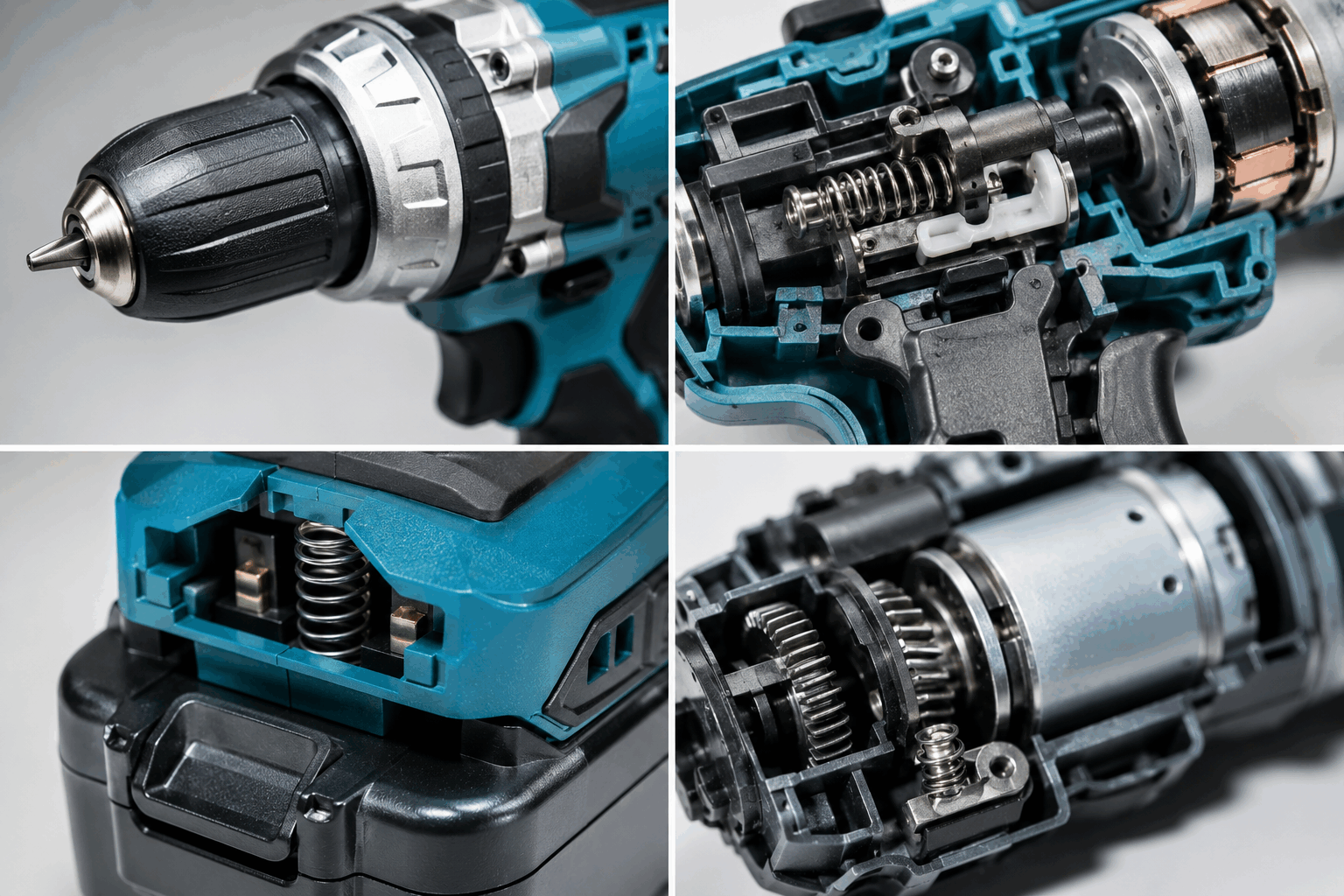
Electric drill, jigsaw, nail gun, cutting machine
Industrial Automation
Thanks to their high degree of standardization, wide load-bearing range, strong reliability, and ability to withstand high-speed, high-frequency motion, tension springs are widely used in feeding mechanisms on automated production lines, for gripping and resetting in robotic arms, for constant-force contact in inspection fixtures, and in various pneumatic valve actuators. They primarily perform functions such as precise feeding, rapid reset, constant-force contact, and drive compensation, making them fundamental and critical elastic components for enhancing the efficiency, precision, and operational stability of automated equipment.
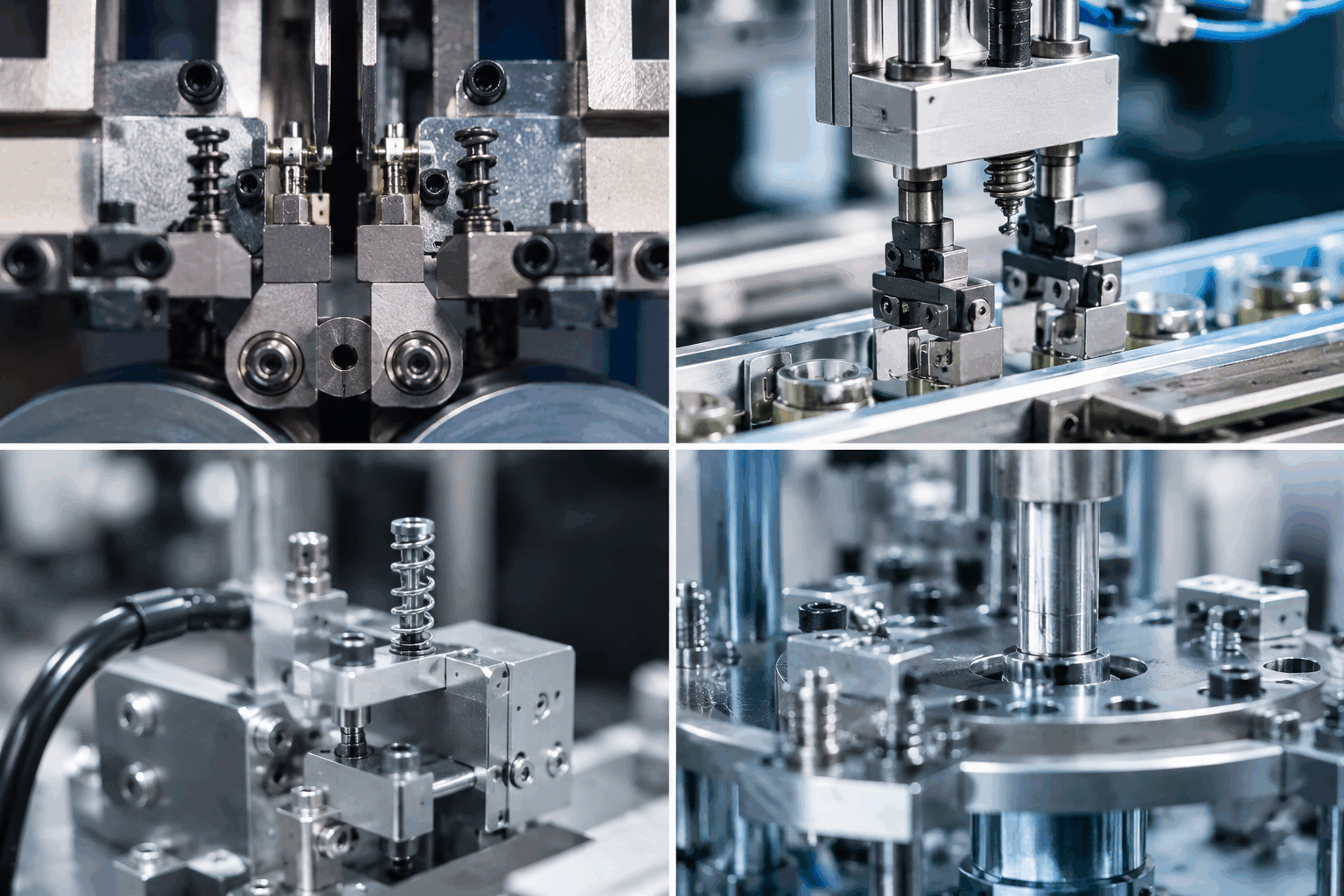
Feeding mechanism, robotic arm, inspection fixture, switch
Medical equipment
Thanks to their biocompatibility, high cleanliness, smooth and seamless motion, and precise, controllable force output, tension springs are widely used in the drive mechanisms of infusion pumps, the automatic retraction of surgical instruments, precision motion modules in imaging equipment (such as CT scanners), and assistive devices in rehabilitation equipment. They primarily serve functions such as precision delivery, automatic retraction, constant-force assistance, and safe power transmission. They serve as precision power and return components that meet the high-precision, high-reliability, and specific hygiene requirements of medical devices.
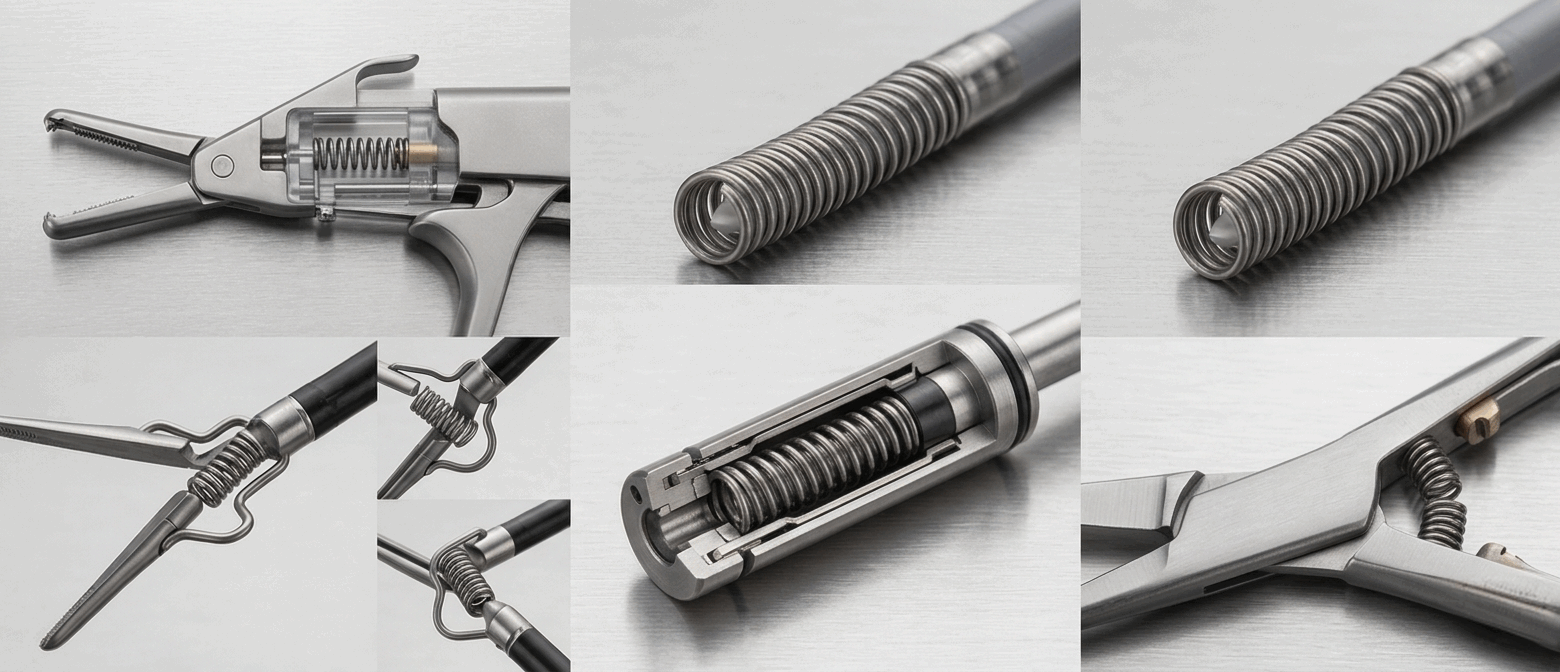
Infusion pumps, wearable monitors, surgical instruments, dental equipment
Automotive Parts
Tension springs are widely used in automotive seatbelt pretensioners, door lock mechanisms, gearshift levers, and various actuators in the engine compartment due to their resistance to high and low temperatures, corrosion resistance, long service life, and ability to maintain stable performance under harsh operating conditions. They primarily perform functions such as safety locking, position holding, force adjustment, and system reset, serving as essential components that ensure vehicle safety, comfort, and the long-term reliable operation of various mechanisms.

Seatbelt mechanisms, door lock mechanisms, trunk, engine compartment, transmission
Robot
Tension springs, with their controllable force, fast dynamic response, high precision, and ability to facilitate compliant interactions, are widely used in force-position compensation for robotic joints, tactile simulation for dexterous grippers, collision protection for collaborative robots, and automatic docking mechanisms. They primarily perform functions such as compliant actuation, force feedback simulation, overload protection, and precision alignment compensation, making them core flexible components for achieving high precision, high safety, and human-robot collaboration.
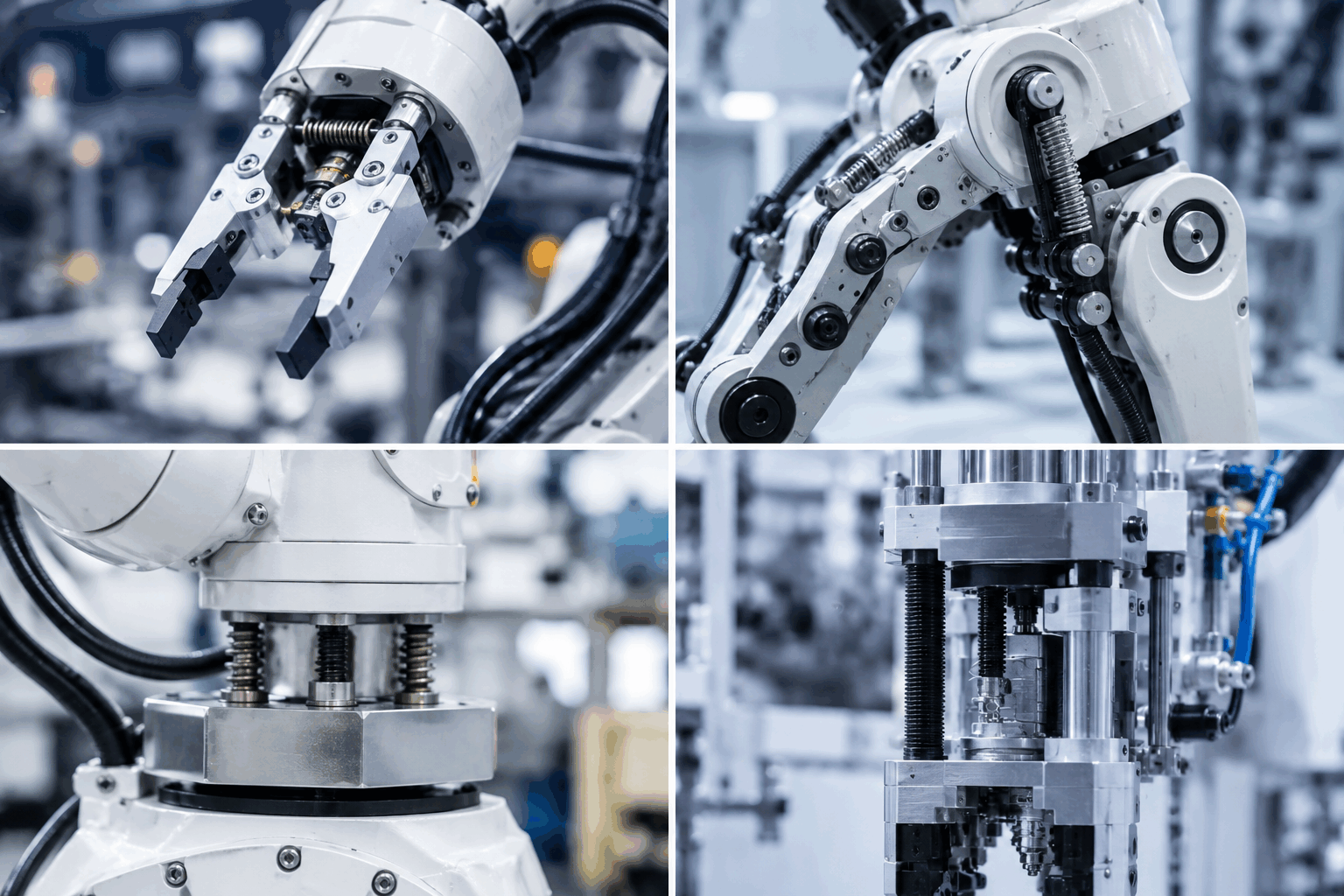
Robot joints, sensors, end-effectors, positioning clips
FAQ and Support
We provide technical consultation and implementation guidance throughout the entire process, offer prompt responses and precise troubleshooting, and provide ongoing operations, maintenance, and after-sales support.
-
 Contact Us+86 (0512) 5036 1526, ext. 805
 -
 Quick Response from AI Experts
 -
 Leave your information
